A better smile does not always require veneers, crowns or extensive tooth preparation. Modern esthetic dentistry increasingly starts with a different question: how much can we improve while preserving as much healthy tooth structure as possible?
This preservation-first philosophy is at the heart of minimally invasive cosmetic dentistry. In the 2026 supplement of The International Journal of Esthetic Dentistry, experts from the European Academy of Esthetic Dentistry (EAED) describe treatment planning as a patient-specific decision in which direct, indirect, orthodontic and periodontal options should be weighed according to biologic cost, esthetic goals, function and long-term prognosis.
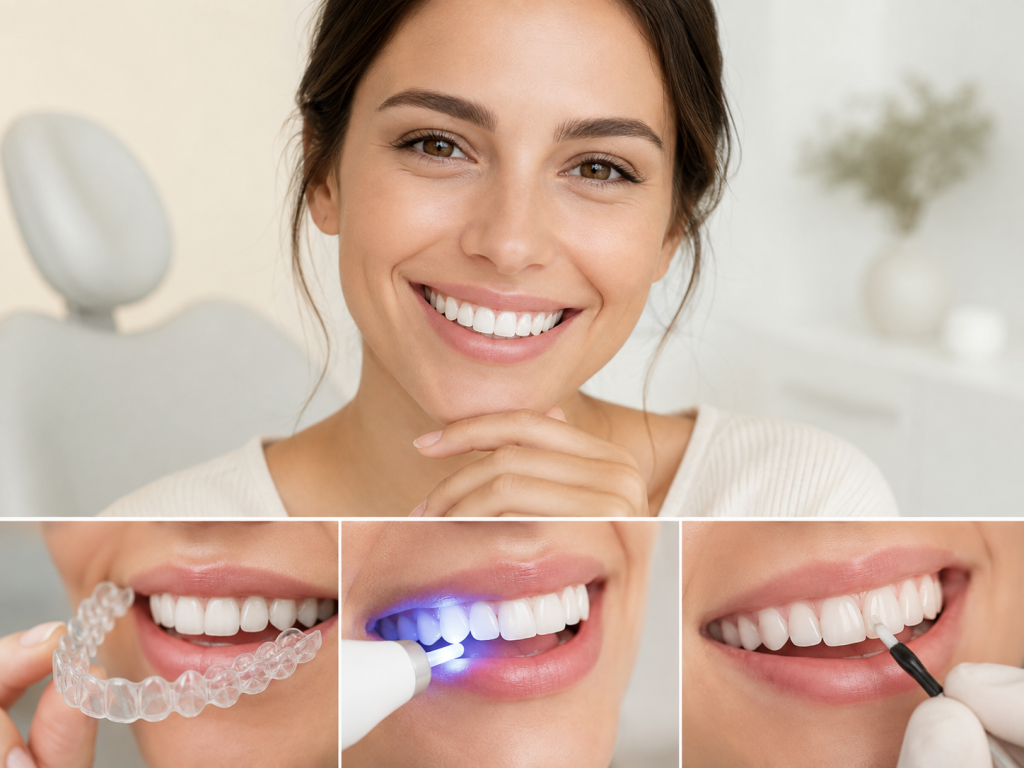
For many patients with healthy teeth and relatively limited esthetic concerns, that logic can lead to a sequence often summarized clinically as Align, Bleach, Bond: first improve tooth position, then optimize the natural tooth color, and finally add composite only where a small shape correction is still needed. The important point is not the acronym itself, but the order: use the least invasive effective step first and escalate only when the case genuinely requires it.
What is minimally invasive cosmetic dentistry?
Minimally invasive esthetic dentistry aims to achieve a meaningful cosmetic improvement while preserving natural enamel, dentin and tooth vitality. It does not mean avoiding restorative dentistry at all costs. It means choosing the most conservative predictable option for the individual patient.
That decision depends on much more than appearance. Tooth position, gum architecture, bite, parafunctional habits such as clenching or grinding, the amount of healthy enamel, the color of the underlying tooth and the patient’s expectations all influence the plan. This is why two people asking for a similar smile change may receive very different recommendations.
The 2026 EAED-related literature emphasizes this ‘gray zone’: in many esthetic cases there is no single universally best material or technique. Good planning means matching the intervention to the actual problem rather than selecting a treatment because it is fashionable or convenient.
The Align, Bleach, Bond sequence
1. Align: improve tooth position before restoring shape
When rotations, crowding, small spaces or uneven tooth positions are part of the esthetic problem, clear aligners can often improve the smile using the patient’s own teeth rather than covering them with restorative material. Orthodontic movement may also create a more favorable position for later bonding, allowing the dentist to add less composite or, in some cases, avoid restorative treatment altogether.
At Clinic Veres, invisible orthodontics is planned after a complete diagnosis and digital records. Clear aligners are highly conservative from a restorative perspective, but it is important to be precise: orthodontic treatment is not always literally ‘zero intervention’. Attachments are commonly bonded to teeth, and small amounts of interproximal enamel reduction may be indicated in selected cases to create space or improve tooth proportions. These decisions depend on the orthodontic plan.
The benefit of aligning first is therefore not that every case is completely untouched, but that tooth position can be corrected before deciding whether any permanent restorative coverage is necessary.
2. Bleach: establish the target tooth color
Once tooth position has been corrected, professional whitening can be considered when color is one of the patient’s concerns. Improving the shade of the natural teeth before definitive esthetic bonding helps the clinician plan restorations around the final color rather than trying to mask a darker substrate with additional material.
This sequencing is particularly relevant because restorative materials do not whiten in the same way as natural enamel. Existing fillings, composite additions, crowns or veneers may need to be evaluated separately. A professional assessment also helps identify whether discoloration is suitable for bleaching and whether there are dental conditions that should be treated first.
In some patients, alignment and whitening already create the desired result. If so, there is no reason to add a third step simply because it was part of the original plan.
3. Bond: refine only what still needs correction
If a small imperfection remains after alignment and whitening, direct composite can be used to refine tooth shape. Common indications include a worn incisal edge, a minor asymmetry, a small diastema or a contour that would benefit from a subtle additive correction.
Direct composite bonding is placed and sculpted directly on the tooth, often in a single appointment. When the case allows an additive approach, little or no tooth reduction may be required. Composite also has an important practical advantage: it can usually be polished, repaired or modified more easily than an indirect ceramic restoration.
It is better described as highly conservative and repairable rather than universally ‘fully reversible’. Bonding requires surface conditioning and, depending on the case, finishing or reshaping; future removal must also be performed carefully to protect the enamel.
Why the order matters
The sequence works because each step can reduce the amount of treatment required by the next one. Alignment may correct the apparent shape problem simply by placing the tooth in a better position. Whitening may reduce the need to mask color. Only after those changes are complete is it clear whether composite refinement is still necessary.
Starting with a veneer or crown on an otherwise healthy tooth can commit the patient to a more restorative pathway from the beginning. By contrast, a staged approach keeps future options open for longer and allows treatment to stop as soon as the patient’s functional and esthetic objectives have been met.
This does not make ceramics ‘wrong’. It makes sequencing important. The goal is to avoid unnecessary loss of healthy tissue while still choosing a more extensive restoration when it is genuinely the more predictable solution.
When might ceramic veneers still be the better option?
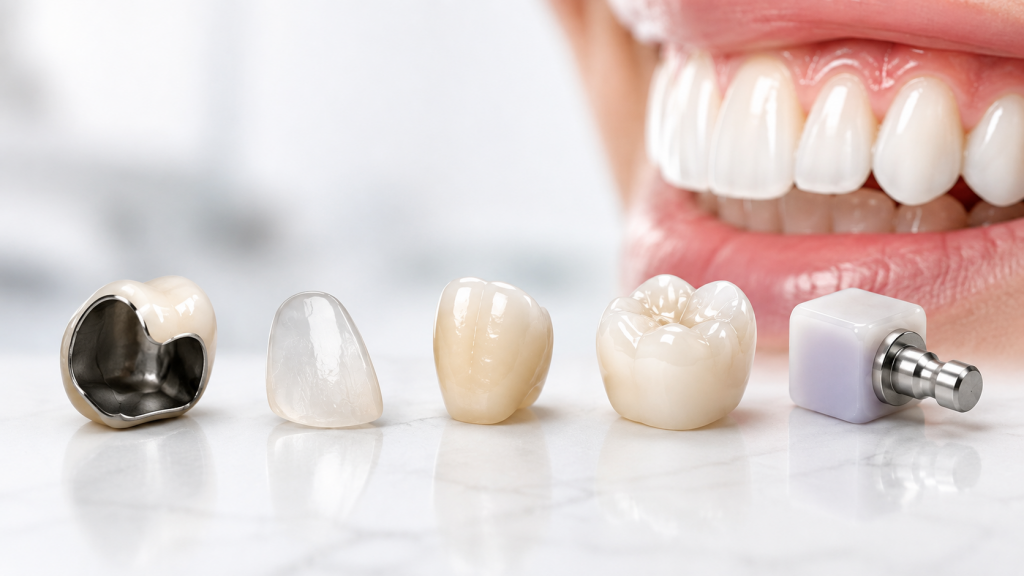
Some cases need more color masking, structural reinforcement or shape change than direct additive composite can predictably provide. Ceramic veneers or other indirect restorations may therefore be appropriate when there is significant discoloration, extensive loss of tooth structure, complex esthetic requirements or a need for a different long-term mechanical behavior.
The 2026 literature on the ‘gray zone’ in esthetic restorative dentistry reinforces that material choice should consider several factors together, including invasiveness, occlusion and parafunction, substrate color, acceptance of future maintenance, age and patient priorities. The best treatment is not automatically the least invasive procedure; it is the least invasive option that can still deliver a predictable, healthy and durable result for that specific case.
Who may be a good candidate for a preservation-first smile plan?
This type of workflow can be particularly useful for patients with generally healthy teeth and gums who have mild to moderate alignment concerns, unwanted tooth color, small spaces, localized edge wear or minor differences in tooth shape.
Before any esthetic plan, active disease must be addressed. Caries, gum inflammation, periodontal disease, significant functional problems or uncontrolled bruxism can change the treatment sequence. Likewise, patients with severe structural loss or major changes in tooth color may need a different restorative strategy from the start.
The key is diagnosis: minimally invasive dentistry is not a fixed three-step package. It is a way of deciding how far treatment actually needs to go.
How we plan minimally invasive smile treatment at Clinic Veres in Valencia
At Clinic Veres, esthetic planning begins with an assessment of oral health, tooth position, smile proportions, gingival architecture, bite, tooth wear and color. Digital records can help visualize the possible result and coordinate orthodontic and restorative phases before irreversible treatment is considered.
Depending on the diagnosis, the plan may include invisible orthodontics, professional whitening, direct composite refinement or, when indicated, ceramic veneers. The aim is not to force every patient through the same sequence, but to select the combination that preserves natural tooth structure while meeting functional and esthetic goals.
If you are considering a smile makeover in Valencia, an individualized assessment can determine whether your case can be improved with a conservative Align, Bleach, Bond approach or whether another pathway would be more appropriate.
Frequently asked questions
Is Align, Bleach, Bond the same as getting veneers?
No. Align, Bleach, Bond is a staged approach that may use orthodontics, whitening and small direct composite additions. Veneers are restorations that cover the front surface of teeth. Some patients may reach their goal without veneers, while others may still benefit from ceramic restorations after conservative options have been assessed.
Can whitening and composite bonding be combined?
Yes, they are often coordinated in esthetic treatment planning. Whitening is commonly completed before definitive composite shade selection because composite does not bleach like natural enamel. The dentist decides the appropriate timing for bonding after whitening based on the product, tooth response and clinical protocol.
Does composite bonding require shaving the teeth?
Not necessarily. Many direct composite corrections can be predominantly additive, especially for small edge, contour or space corrections. However, some cases may require limited finishing or surface modification. The amount of tooth preparation should be determined individually.
Can clear aligners avoid the need for veneers?
Sometimes. Improving tooth position can reduce the amount of restorative correction required, and in selected cases it may eliminate the need for veneers. It cannot solve every problem, especially when there is substantial discoloration, structural damage or a major shape deficiency.
When are ceramic veneers more appropriate?
Ceramic veneers may be considered when the case requires greater masking, more extensive shape modification or a different combination of strength, color stability and long-term maintenance than direct composite can provide. The decision should follow a complete esthetic and functional diagnosis.
A better smile with only the treatment you need
Minimally invasive esthetic dentistry is not about doing less for the sake of doing less. It is about preserving healthy tissue while using orthodontics, whitening, composite and ceramics in the order and amount that make sense for each patient.
For the right case, aligning first, whitening second and bonding only where needed can create a natural-looking result while keeping future options open. At Clinic Veres in Valencia, the starting point is always the same: diagnose first, plan carefully and intervene only as much as the smile truly requires.
Patient information / Información para pacientes: This article is for general patient education and does not replace an individualized clinical evaluation.